
"historic ports"
400 article(s) found

Colombia spends a lot of money on protecting World Heritage Coffee Park
The Colombian government announced today that it will invest 100 billion Colombian pesos (about 300 million yuan) to protect coffee cultural scenic areas that have been listed as a United Nations World Heritage site.

Starbucks like a museum of art
Local sculptor David Borgerding specially used the old iron gate to create a chic chandelier for the new store, while the 12 prints above the bar about how coffee beans turned into espresso were created by another local artist, Jason Horton. In addition, Mystic Blue Signs was hired to do hand-painted gold ironing for shop windows and coffee cans

Columbia Kogi Manor (Xuefeng Manor) introduction of Colombian Coffee
Professional coffee knowledge exchange more coffee bean information please follow the coffee workshop (Wechat official account cafe_style) Kogui can also be used as Kogi or Cogui, which means Jaguar in Kogi. The Kogi people originated from American Indian ethnic groups and lived in Sierra Nevada, Santa Marta in the Sierra Nevada Mountains of Colombia. The civilization can be traced back to
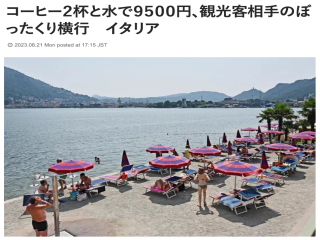
Two cups of coffee 60 euros! Reason: Can see luxury yacht!!
▲ Click to follow| Daily Boutique Coffee Culture Magazine Coffee Workshop This summer, Italy's restaurant industry has seen a number of incidents involving bills, all of which have sparked heated discussions on social media. CNN reported that two tourists ordered two cups of coffee and two glasses of water at Cervo restaurant in Sardinia.

Introduction of coffee producing countries in Africa-introduction of coffee producing areas in Ethiopia, Kenya and Yemen
Africa is the third largest coffee producer in the world, after South America and Asia. Ethiopia, Kenya and Yemen are the main coffee products in Africa. Ethiopia is the largest Arabica producer in Africa, followed by Kenya. Yemeni coffee production, which monopolized the global coffee market before the 18th century, is declining year by year and is about to disappear from the coffee map. First of all, let's talk about
Yemeni mocha coffee history, culture, characteristics, industry development
Yemeni coffee, a well-known coffee named after a port in Yemen. The most familiar mocha coffee. When the word appears on the recipes of bags and cafes, the meaning is different. The former refers to the port where coffee beans are exported, while the latter refers to a kind of coffee. Strictly speaking, coffee beans exported from the port of Mocha in Yemen can be called mocha coffee. Later, the port
Fine coffee Irish coffee is a kind of hot coffee
Corresponding to the hundred poems of wine fighting in the East, coffee has also been endowed with the status of legendary potion in western literature. Today, Espresso and its derivatives are synonymous with literary coffee, and the birth of Espresso is closely related to the eastern Italian city of Trieste. Although the celebrity list of cafes here is not as dazzling as that of Rome and Paris, it also has its own.

The largest coffee consumer country Brazil Coffee Kingdom History Story Brazilian Red Bourbon Coffee Bean Features Flavor
Coffee was introduced into the country as early as the 18th century. The story goes that in 1727, the Brazilian government sent a heroic soldier-Lieutenant Colonel Francisco de Mello Pachta-to smuggle coffee seeds from Guyane française under the guise of mediating a border dispute. It is said that the lieutenant was attracted to the governor's wife, and at the farewell state dinner she presented him with a bouquet of flowers.

Let me introduce you to Ismari, one of the members of the Mocha family.
Professional coffee knowledge exchange more coffee bean information please follow the coffee workshop (Wechat official account cafe_style) latte, cappuccino, mocha comparison do you know the difference between latte (Latte), cappuccino (Cappuccino), mocha (Mocha)? When you open the Menu in the cafe, or stand in front of the ordering bar, you are

Introduction to the characteristics of the manor producing area of Brazilian coffee boutique coffee bean flavor
Napoleon invaded Portugal in 1807 and the Portuguese royal family moved to Brazil. In 1820, the Portuguese royal family moved back to Lisbon, and Prince Pedro Reuba became regent. On September 7, 1822, complete independence from Portugal was declared and the Brazilian Empire was established. Then he was crowned emperor, Pedro I. Brazil promulgated the Constitution in 1824. In 1825, Portugal recognized Brazil's independence. During the Imperial period (1822-1889)

An introduction to the History of Coffee Flavor in Kogui Kogi Manor (Xuefeng Manor) in Colombia
Columbia Kogi Manor (Xuefeng Manor) "Kogui" can also be used as "Kogi" or "Cogui", which means "Jaguar" in Kogi. The Kogi people originated from American Indian peoples and lived in Sierra Nevada, Santa Marta, in the Sierra Nevada Mountains of Colombia, with a civilization dating back to pre-Columbian times. The Kogi people and their

The story of Yemeni mocha coffee Yemeni mocha coffee flavor description taste characteristics
Professional coffee knowledge exchange more coffee bean information please follow coffee workshop (Wechat official account cafe_style) hometown of mocha coffee-Yemeni country: Yemen ■ production area: Bani Matar ■ altitude: 2000-2400 m ■ treatment: sun-cured ■ varieties: Madali flavor description: taste full and thick, woody, wine, juice, berries, dried fruit

Bolivian Xuemai Manor introduces coffee varieties and flavor boutique coffee beans in producing areas
Bolivia was conquered by Spain at the end of the 15th century and became a Spanish colony in 1538, historically known as Peru, belonging to the governor district of La Plata, Spain. Bolivia was rescued from independence by Bolivar, a national hero from Caracas, Venezuela, during the War of Independence in Latin America in the 18th century, so the country was named after him. On August 6, 1825, it was announced that

The introduction of Ruili Jingpo Nongxian coffee was recorded in 1914.
In April 1996, compiled by the compilation Committee of Ruili City Chronicles of Yunnan Province, the fifth coffee section on page 383 of Ruili City Chronicles published by Sichuan Dictionary Publishing House recorded that as early as 1914, the Jingpo nationality had been introduced from Myanmar to Nongxian Township for cultivation. The local series of books of the people's Republic of China, Records of Yunnan Province, Volume 39, Records of Land Reclamation, Chapter 3, Section 2, Coffee is recorded: the cultivation of coffee in China began in 1884.

Nicaraguan Coffee introduces the Cultural Origin of Fine Coffee beans Flavor and Taste
Managua, the capital of Nicaragua, is located in the west of the border, on the south bank of Lake Managua, hence its name. The northwest is 140 kilometers away from the Collinto seaport on the Pacific coast. 55 meters above sea level. It is a Spanish city with beautiful scenery. Because it is located on the eastern side of the Pacific volcanic active seismic belt, the city has had four strong earthquakes in the past 100 years, including one in December 1972.

History of introduction and expansion of Coffee in early China (1)
1. The introduction of Ruili Jingpo Nongxian Coffee was recorded in 1914. In April 1996, it was compiled by the compilation Committee of Ruili City Chronicles of Yunnan Province. The fifth coffee section on page 383 of Ruili City Chronicles published by Sichuan Dictionary Publishing House recorded that as early as 1914, the Jingpo people have been introduced from Myanmar to Nongxian Township for cultivation. Yunnan Provincial Chronicles, Volume 39, Chapter 3 of the Local Series of the people's Republic of China

Columbia Coffee producing Manor-Kogi Manor Kogui Snow Peak Manor Coffee Taste
For the exchange of professional baristas, please pay attention to the coffee workshop (Wechat official account cafe_style) Kogui can also be used as Kogi or Cogui, which means Jaguar in Kogi. The Kogi people originated from American Indian ethnic groups and lived in Sierra Nevada, Santa Marta, in the Sierra Nevada Mountains of Colombia. Civilization can be traced back to the pre-Columbian era.
The History of Coffee introduction and expansion in China in the early stage (1)
1. The introduction of Ruili Jingpo Nongxian Coffee was recorded in 1914. In April 1996, it was compiled by the compilation Committee of Ruili City Chronicles of Yunnan Province. The fifth coffee section on page 383 of Ruili City Chronicles published by Sichuan Dictionary Publishing House recorded that as early as 1914, the Jingpo people have been introduced from Myanmar to Nongxian Township for cultivation. Yunnan Provincial Chronicles, Volume 39, Chapter 3 of the Local Series of the people's Republic of China

Introduction to the characteristics of Colombian Coffee Flavor Manor with moderate acidity
After taking office in 2002, Colombian President Uribe took a tougher right-wing line. FARC was vigorously besieged and suppressed by the government. The Revolutionary Armed Forces of Colombia killed Uribe's father in 1983. After Uribe came to power, the top priority was to fight against the Revolutionary Armed Forces of Colombia, which brought Colombia closer to the United States, and the United States gave more money to Colombia. Since 2000

Brazilian coffee manor, Brazilian coffee flavor
Follow the caf é (Wechat official account vdailycom) found that Brazilian coffee opened a small shop of its own. The vast majority of Brazilian coffee is Arabica species, the main varieties are Burubon, Mdonabang, Kakala and La Ukeji secret species. Coffee has been cultivated in new places inland, thanks to natural benefits, and Panama became famous as a new coffee producer in Brazil after the war.